

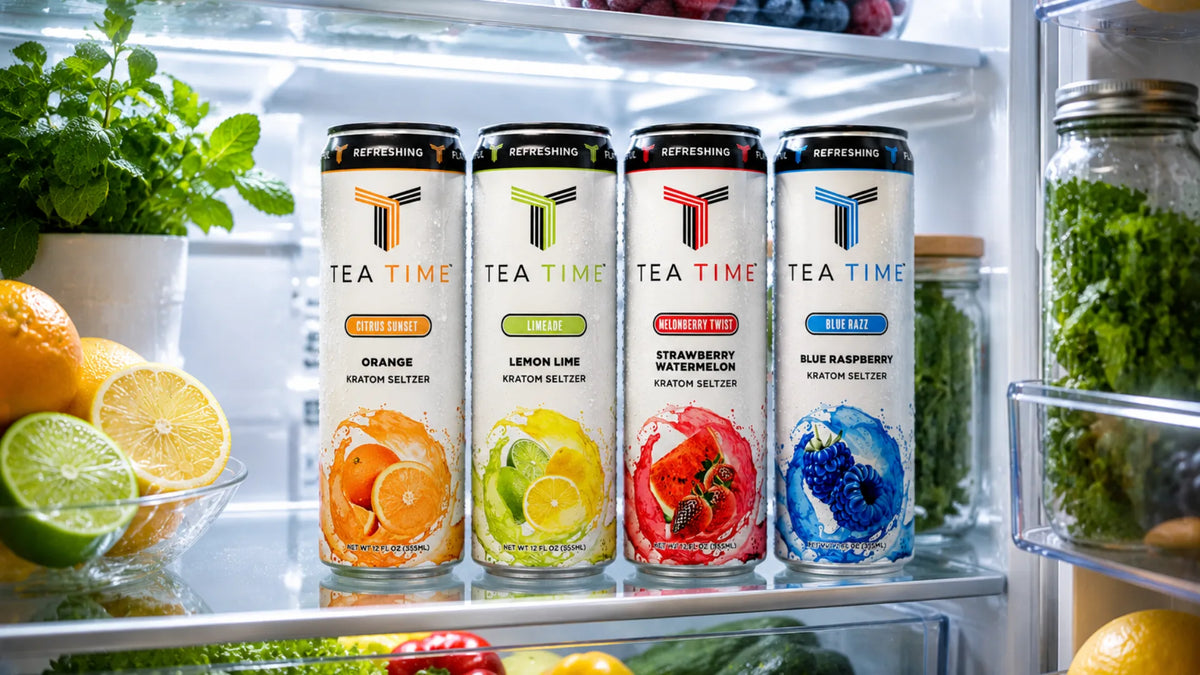
Kratom seltzer does not remain at its best indefinitely. Like other ready-to-drink canned beverages, each can has a manufacturer-assigned best-before or expiration date based on its formulation, packaging, and quality testing.
According to Tea Time, most Kratom drinks have a shelf life ranging from several months to approximately one year when stored correctly. The exact date printed on each can should always be treated as the primary reference.
In this guide, you will learn:
- How long Tea Time Kratom Seltzer lasts unopened
- Where to find Kratom Seltzer expiration date
- How to store Kratom Seltzer correctly
- Whether Kratom Seltzer should be refrigerated
- Which packaging and beverage changes to check
- What to consider before opening an older can or placing a bulk order
Heat, direct sunlight, damaged packaging, and storage beyond the printed date may gradually affect carbonation, appearance, consistency, and overall product quality.
Tea Time Kratom Seltzer generally has a shelf life ranging from several months to approximately one year when stored correctly. Always check the date printed on the can, keep unopened cans sealed in a cool place away from direct sunlight, and refrigerate opened cans.
Table of Contents:
-
Where To Find the Kratom Seltzer Expiration Date
-
Does Refrigeration Extend Kratom Seltzer Shelf Life?
-
How To Store Bulk Kratom Seltzer Orders
Does Kratom Seltzer Expire?
Yes, Kratom seltzer can expire. It is a formulated, ready-to-drink beverage made with Kratom extract, water, carbonation, flavoring ingredients, and other formulation components. These elements do not remain unchanged forever, even when the can stays unopened.
Want a closer look at how Kratom seltzer is formulated? Read our guide on How Kratom Seltzer Is Made to learn more about the process.
The print's expiration or best-before date shows the period during which the manufacturer expects the product to maintain its intended quality and consistency.
Over time, several factors may affect the beverage:
- Heat may speed up changes within the formulation
- UV light may contribute to mitragynine degradation
- Damaged seals may allow air or contaminants to enter.
- Temperature swings may affect carbonation and product stability
- Extended storage may lead to changes in appearance or consistency

An aluminum can provides strong protection from light and outside air, but proper storage still matters. Keeping cans sealed, cool, dry, and away from direct sunlight helps protect the formulation throughout its stated shelf life.
A best-before date does not always mean the beverage changes immediately the next day. However, the printed date should remain the main reference when checking an older can, especially for bulk orders stored over several months.
How Long Does Tea Time Kratom Seltzer Last Unopened?
Tea Time states that most Kratom drinks have a shelf life ranging from several months to approximately one year when stored correctly. However, the exact window may differ by batch, production date, or flavor.
For the most accurate information, check the best-before or expiration date printed on the individual can. This date is more reliable than applying one general timeline to every Tea Time product.
An unopened can is more likely to maintain its intended quality when it is
- Kept fully sealed
- Stored in a cool, dry location
- Protected from direct sunlight and UV exposure
- Kept away from heaters, hot vehicles, and warm storage areas
- Protected from dents, punctures, or damage around the seal
- Stored under steady temperatures rather than repeated hot-and-cold changes
Tea time" also refers to consistency across cans over a six-month period. This supports the importance of formulation stability, but it should not be treated as a universal six-month expiration guarantee.
For bulk purchases, organize cans by their printed dates and place the earliest-dated cans at the front. This simple rotation method makes inventory easier to manage and reduces the chance of storing a can beyond its start date.
How to Store Kratom Seltzer Correctly?
Proper Kratom seltzer storage helps maintain carbonation, formulation consistency, and overall product quality until the last printed best-by date. Unopened cans may not require refrigeration, but they should remain under stable storage conditions.
1. Keep unopened cans sealed
Leave each can unopened and in its original packaging until required. An intact seal helps limit exposure to air, moisture, and outside contaminants.
Before storing a can, check for:
- Deep dents
- Puncture or leaks
- Swelling or bulging
- Damage around the lid
- A loose or broken seal
Avoid keeping any can that shows clear signs of packaging damage.
2. Store cans in a cool and dry place
A pantry, cabinet, or temperature-controlled storage area is generally suitable when it follows the instructions printed on the label.
Keep Kratom Seltzer away from:
- Ovens and stovetops
- Radiators and heating vents
- Hot garages
- Parked vehicles
- Damp storage areas
- Location with frequent temperature changes
A steady room temperature is preferable to repeated movement between hot and cold environments.

3. Protect the cans from sunlight and UV exposure
Store the cans away from windows and direct sunlight. Aluminum packaging blocks light from reaching the beverage, but sunlight can still increase the temperature of the can and surrounding area.
Good storage locations include:
- Closed kitchen cabinets
- Cool pantry shelves
- Temperature-controlled stockrooms
- Refrigerators
- Shaded storage spaces
Avoid windowsills, outdoor storage, and areas exposed to direct UV light.
4. Refrigerate Kratom Seltzer after opening
Once opened, place the can in the refrigerator and follow the after-opening guidance printed on the label. Exposure to air may gradually reduce carbonation and affect product consistency.
After opening:
- Refrigerate the can promptly
- Keep it covered where possible
- Avoid leaving it at room temperature for long periods
- Follow any time limit stated on the packaging
- Discard it if the appearance or packaging seems unusual
The individual product label should remain the main reference.
5. Rotate cans from bulk orders
When buying several cases, arrange the cans according to their printed best-before dates. Place earlier dates at the front and later dates behind them.
This approach helps you:
- Keep inventory organized
- Identify older stock quickly
- Monitor printed dates more easily
- Reduce unnecessary long-term storage
- Prevent earlier-dated cans from being overlooked
It is also helpful to check dates when a new order arrives rather than waiting until the cans are placed into storage.
Signs Your Kratom Seltzer May Have Gone Bad
A printed date is the first thing to check, but the condition of the can also matters. Packaging damage, unusual pressure, or visible changes may indicate that the product no longer matches its expected quality.
For customers comparing different formulations, understanding how Kratom drinks and Kratom Seltzers differ can help explain why packaging and storage matter.
1. Check the Best-Before or Expiration Date
Start with the date printed on the can. This gives the clearest batch-specific reference provided by the manufacturer.
Look for:
- A date printed on the bottom or side of the can
- A best-before, best-by, or expiration label
- A batch or lot code near the date
- Storage instructions printed beside the product information
A can stored beyond its printed date should be treated cautiously, even when the packaging appears normal.
2. Look for Bulging or Swelling
A can should keep its normal shape. Swelling may indicate excess internal pressure or changes inside the container.
Do not open a can that has:
- A rounded or raised top
- A bulging bottom
- Distorted sides
- Unusual firmness caused by pressure
- A can that rocks instead of sitting flat
Bulging is different from a small cosmetic dent and should not be ignored.

3. Check for Leaks or Seal Damage
The top seam and pull tab should remain intact. Damage around these areas may allow air or outside material to enter.
Inspect the can for:
- Moisture around the lid
- Sticky residue on the exterior
- Rust near the seams
- Small punctures
- A loose pull tab
- Cracks or damage around the seal
A leaking or punctured can should be discarded.
4. Watch for Unusual Changes After Opening
Once opened, compare the beverage with the appearance and carbonation expected from a fresh can of the same flavor.
Possible warning signs include:
- Unexpected cloudiness
- Heavy separation that does not settle normally
- Unusual particles
- A major color change
- Little or no carbonation when the can was properly sealed
- Foaming or pressure that appears abnormal
Some separation may occur in formulated beverages, so check the label for instructions such as gently turning or shaking the can before judging the product.
5. Notice Unusual Can Pressure
Normal carbonation creates some pressure, but the can should not appear severely pressurized before opening.
Be cautious when:
- The can feels unusually hard
- The lid is pushed upward
- The liquid sprays excessively upon opening
- The can has been exposed to high temperatures
- The packaging makes unusual sounds while still sealed
Heat can increase pressure inside a carbonated aluminum can, particularly when it has been stored in a hot vehicle or near a heat source.
For questions about a specific tea time batch, keep the lot code and contact the company directly for product guidance.
Can You Drink Expired Kratom Seltzer?
Drinking Kratom seltzer after its printed expiration date is not recommended. The date shows the period during which the manufacturer expects the beverage to maintain its intended carbonation, formulation consistency, and overall product quality when stored correctly.
A best-before or best-by date usually refers to the expected quality window, while an expiration date may indicate a firmer endpoint provided by the manufacturer. A production date or batch code alone does not confirm how long the beverage should be stored, so always check the exact wording printed on the Tea Time can.
Over time, an older Kratom seltzer may show changes such as
- Reduced carbonation
- Changes in color or clarity
- Ingredient separation
- Changes in formulation consistency
- Gradual Kratom alkaloid degradation
- Lower overall product quality
Storage conditions matter as much as the printed date. Heat, direct sunlight, damaged packaging, and frequent temperature changes may affect the beverage before the stated date arrives.
Discard the can if you notice:
- A broken or loose seal
- Leaks, punctures, or rust
- A swollen top or bottom
- Deep damage around the seams
- Unusual pressure
- Noticeable changes in appearance
- An unknown or questionable storage history
For an older or uncertain can, check the lot code, review the available COA, or contact Tea Time.
Final Thoughts: Does Kratom Seltzer Expire?
Yes, Kratom seltzer has a limited shelf life. Tea Time states that most Kratom drinks can remain within their expected quality window for several months to approximately one year when stored properly, but the printed date on each can should always be the main reference.
To protect product quality, keep unopened cans sealed, cool, dry, and away from direct sunlight or heat. Refrigerate opened cans promptly, rotate bulk orders by date, and inspect older cans for leaks, swelling, damaged seals, or unusual changes.
When a can’s date, packaging, or storage history is uncertain, contact Tea Time with the flavor and batch details before making a decision.
For those looking to explore different varieties, you can browse Tea Time’s collection of ready-to-drink Kratom Seltzer flavors and discover the options available.
Frequently Asked Questions
1. Does Kratom Seltzer Go Bad?
Yes. Kratom seltzer has a limited shelf life, even when the can remains unopened. Tea Time states that most Kratom drinks last from several months to approximately one year when stored properly. The printed date on each can provides the most accurate reference.
2. How Long Does Kratom Seltzer Last in the Fridge?
An unopened can may remain within its stated quality window until the printed best-before date, provided it has been stored correctly. Once opened, refrigerate the can promptly and follow any after-opening instructions printed on the packaging.
3. Can I Store Kratom Seltzer at Room Temperature?
Yes, sealed cans can generally be kept at room temperature when the product label permits it. Choose a cool, dry location away from direct sunlight, heating equipment, hot vehicles, and frequent temperature changes.
4. What Happens if I Drink Expired Kratom Seltzer?
A can stored beyond its printed date may no longer maintain its expected carbonation, appearance, consistency, or alkaloid stability. Rather than relying only on appearance, follow the printed date and discard cans with swelling, leaks, damaged seals, or unusual changes.
5. Does Heat Affect Kratom Seltzer?
Yes. Heat may increase pressure inside a carbonated can and accelerate changes within the beverage formulation. Avoid storing Tea Time Kratom Seltzer near ovens, radiators, windows, hot garages, or inside parked vehicles.
6. Should I Refrigerate Kratom Seltzer?
Unopened cans may not require refrigeration unless the label says otherwise. However, refrigeration provides a cool and stable environment. Once a can has been opened, place it in the refrigerator promptly and follow the packaging instructions.
7. How Do I Know if Kratom Seltzer Has Lost Potency?
Potency cannot be confirmed accurately through appearance alone. Heat, light exposure, extended storage, and poor storage conditions may contribute to mitragynine degradation over time. Check the printed date, batch code, storage history, and available laboratory report for the product.


