

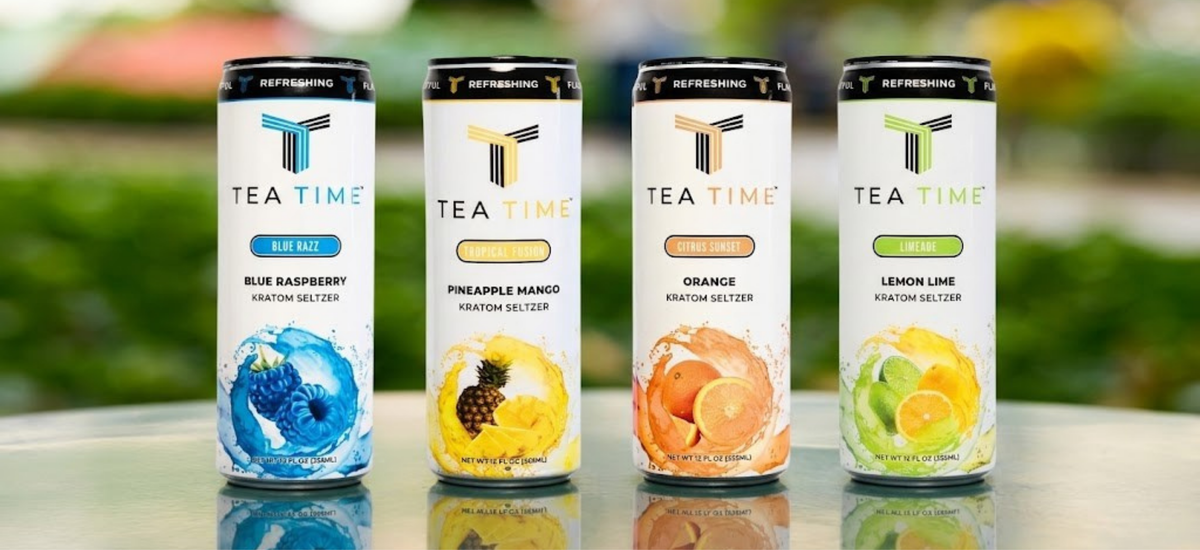
Kratom seltzers have become one of the fastest-growing formats in the functional beverage market. Unlike loose powder or capsules, a kratom seltzer comes ready to drink — carbonated, flavored and precisely formulated. But what actually goes into making one?
Understanding how kratom seltzer is made helps buyers make more informed decisions about quality, consistency and what to look for on a label before purchasing.
How Is Kratom Seltzer Made? — Quick Answer
Kratom seltzer is made by extracting active compounds from kratom leaves, blending the extract with water, flavoring, and stabilizers to create a beverage base. The mixture is tested for quality, carbonated with carbon dioxide under pressure, and then canned, sealed, and labeled for distribution.
Kratom Seltzer Manufacturing Process
Every commercial kratom seltzer goes through the same core production process. Each step is designed to ensure the final can delivers a consistent, safe and enjoyable drinking experience.
Step 1: Sourcing Mitragyna Speciosa Extract
The process starts with the kratom plant itself — Mitragyna speciosa — a tropical tree native to Southeast Asia grown in countries including Thailand, Indonesia and Malaysia.
Commercial kratom seltzer manufacturers use processed kratom extract rather than raw powder. Extract allows for precise control over alkaloid content and produces a cleaner, more stable base for beverage production.
How kratom extract is produced:
- Drying and milling kratom leaves
- Extracting alkaloids using water or food-grade solvents
- Filtering and concentrating the solution
- Standardizing the extract for consistency
This measure is taken so that the botanical content of the extract-based drink can be of a constant and quantifiable composition prior to the beverage making it to the manufacturing stage. Read about the FDA’s review about the import of Kratom based products.
Standardized extract is also useful in ensuring that the formulation used by the beverage manufacturers is the same in each batch.
Read more about Mitragyna Speciosa.
Step 2: Kratom Beverage Formulation
After the extract is prepared, the next stage is Kratom beverage formulation. This step transforms the Kratom extract into a concentrated drink.
The formulation typically includes:
- Mitragyna speciosa extract
- Purified water
- Natural or artificial flavoring
- Sweeteners (such as cane sugar or alternative sweeteners)
- Acid regulators (like citric acid)
- Stabilizers or emulsifiers
At this stage, manufacturers develop the flavored Kratom beverage profile. Flavor balancing is important because Kratom extract has a naturally bitter taste, so beverages are designed with certain flavor combinations that improve taste.
The goal is to create a stable base liquid that can later be carbonated to produce a fizzy Kratom drink.
Step 3: Filtration and Quality Testing
Before carbonation and packaging, the beverage base undergoes filtration and quality checks. This ensures the drink meets safety and consistency standards.
Quality control steps may include:
- Microbial testing
- Ingredient verification
- pH balance testing
- Stability testing
Many responsible manufacturers also conduct third-party lab testing, which verifies the composition of the beverage and confirms it meets quality guidelines.
Testing at this stage is important because ready-to-drink Kratom beverage products require stable ingredients that remain consistent throughout shelf life. Learn more about high-quality manufacturing.
Step 4 — Carbonation Process
Once the beverage base passes quality testing, carbonation is added to create the sparkling texture that defines a kratom seltzer.
Carbonation works by dissolving carbon dioxide gas into the liquid under controlled pressure. When the sealed can is opened, the pressure releases and the CO2 escapes as bubbles — creating the familiar fizzy sensation. Learn more about carbonated drinks.
How carbonation affects the drinking experience:
- Creates a crisp, refreshing mouthfeel
- Softens the perception of bitterness in the botanical base
- Makes the drink feel lighter and more refreshing
- Mimics the familiar experience of drinking sparkling water or a flavored seltzer
Different brands choose different carbonation levels. Some kratom seltzers are lightly carbonated — similar to a sparkling water. Others are more heavily carbonated — closer to a soft drink.
Step 5 — Beverage Canning and Packaging
The final stage of production is filling, sealing and labeling the cans. This happens on a commercial beverage canning line designed for high-volume production while maintaining strict hygiene standards.
The canning process involves:
- Filling aluminum cans with the carbonated beverage under pressure
- Immediately sealing the cans to prevent carbonation loss and contamination
- Applying labels with all required product information
- Batch coding each can for full supply chain traceability
- Final inspection before the product is released for distribution
The aluminum can itself plays an important role in shelf stability. It blocks light and air — two of the main factors that degrade botanical beverage ingredients over time. This is why kratom seltzers in cans have a significantly longer shelf life than homemade kratom drinks.
Why Kratom Seltzers Use Extract Instead of Powder
Using extract instead of raw kratom powder offers several advantages:
- Better consistency across batches
- Easier mixing with liquids
- Improved taste and texture
- Longer shelf stability
Extract-based formulations are essential for producing a uniform, ready-to-drink beverage.
Quality & Safety in Kratom Seltzer Manufacturing
Reputable manufacturers follow strict standards to ensure product safety and transparency.
Key practices include:
- Third-party lab testing (COA reports)
- Ingredient verification
- Clean manufacturing processes
- Consistent formulation controls
These steps help ensure that kratom seltzers remain stable, safe, and reliable for consumers.
Frequently Asked Questions
How is kratom extract made for drinks?
Kratom extract is made by processing dried leaves, extracting alkaloids using solvents, filtering the solution, and concentrating it into a standardized form.
Does kratom seltzer contain alcohol?
No, kratom seltzers are non-alcoholic beverages unless specifically stated otherwise.
Is kratom seltzer stronger than powder?
Not necessarily. Strength depends on formulation and concentration, but seltzers are typically standardized for consistency.
Can beginners try kratom seltzer?
Many people find seltzers more approachable due to their ready-to-drink format and controlled formulation.
How long does kratom seltzer last?
Most kratom seltzers are shelf-stable and can last several months when stored properly.
Is kratom seltzer carbonated?
Yes, kratom seltzer is carbonated using carbon dioxide to create a fizzy, sparkling texture.
What is kratom seltzer made of?
Kratom seltzer is made from kratom extract, water, flavoring, sweeteners, and carbonation.
Is kratom seltzer better than powder?
Kratom seltzers are more convenient and consistent, but preference depends on user choice and format.
Final Thoughts
Kratom seltzers are made through a structured manufacturing process that combines botanical extraction with modern beverage technology. From extracting active compounds to carbonation and packaging, each step is designed to create a consistent, convenient, and ready-to-drink product.
As kratom beverages continue to evolve, seltzers stand out as one of the most accessible and standardized formats available today.


