

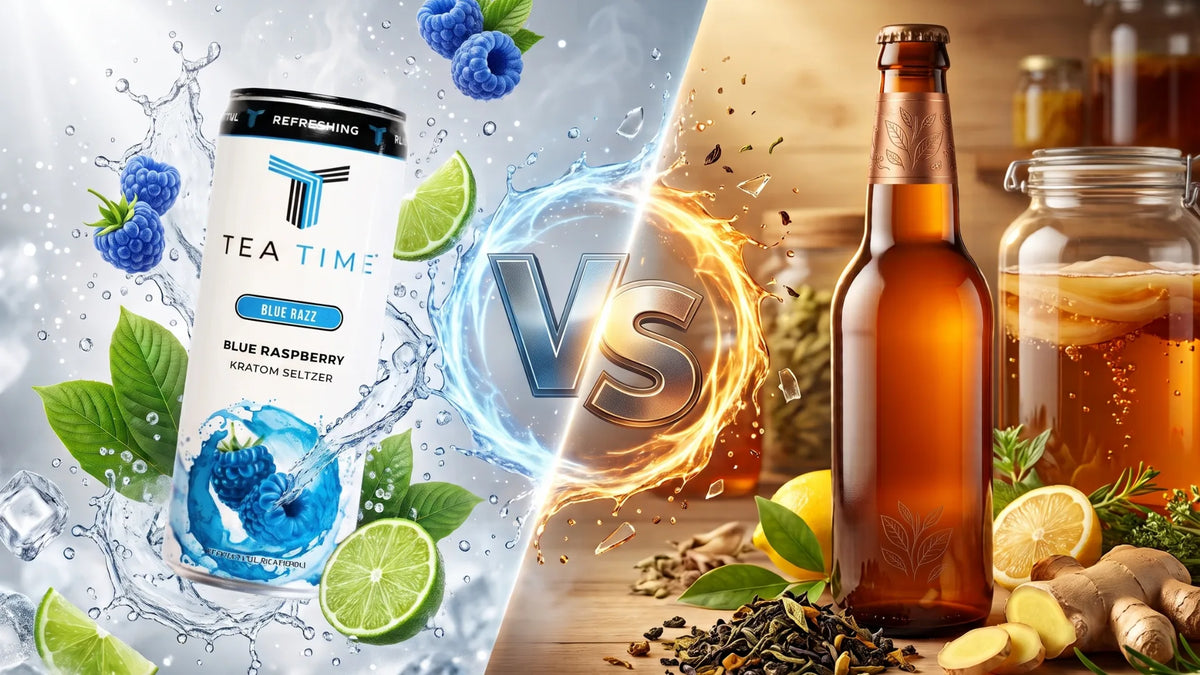
Kratom seltzer and kombucha may share space in the functional beverage aisle, but they are not interchangeable. Kratom seltzer is a botanical sparkling drink made with ingredients derived from Mitragyna speciosa. While kombucha is a fermented tea traditionally made with tea, sugar, and a symbiotic culture of bacteria and yeast, commonly called a SCOBY.
At a glance:
- Kombucha is a fermented tea commonly associated with organic acids and potential live cultures.
- Kratom seltzer is a botanical beverage containing Kratom-derived alkaloids such as mitragynine.
- Kombucha may contain trace alcohol because of the fermentation process.
- Kratom seltzer is not fermented and typically does not contain probiotics.
- Both drinks can differ in caffeine, calories, carbonation, flavor, and price.
- Neither category should be treated as a substitute for medical advice or a treatment.
The main difference comes down to formulation and purpose. Kombucha is generally selected for its fermented profile, while Kratom Seltzer is positioned as a ready-to-drink botanical beverage.
The Kratom seltzer vs. kombucha comparison explains how these two functional drinks are made, what separates their formulations, and which category may better match different beverage preferences.
Table of Contents
- What Is Kombucha?
- What Is Kratom Seltzer?
- Kratom Seltzer vs. Kombucha: Key Differences at a Glance
- Taste and Carbonation Comparison
- Which Is Right For Your Lifestyle
- Can You Drink Kratom Seltzer and Kombucha Together?
- Conclusion: Kratom Seltzer vs. Kombucha
- Frequently Asked Questions
What is Kombucha?
Kombucha is a fermented beverage usually made from brewed tea, sugar, and a SCOBY. The term "SCOBY" stands for “symbiotic culture of bacteria and yeast." During fermentation, the culture converts part of the sugar into organic acids, carbon dioxide, and small amounts of alcohol.
The result is a lightly sparkling drink with a tangy, slightly acid profile. Depending on the brand and recipe, kombucha may also contain fruit juice, herbs, spices, natural flavors, or added sweeteners.
A review published in Comprehensive Reviews in Food Science and Food Safety examined kombucha’s microbiology, fermentation process, and composition, including the role of SCOBY cultures in creating the beverage’s characteristic compounds.
Key characteristics of kombucha include:
- Base: Usually black tea, green tea, or a blend
- Production method: Fermentation with bacteria and yeast
- Carbonation: Naturally produced during fermentation or added later
- Probiotics: Some refrigerated and unpasteurized varieties may contain live cultures
- Caffeine: Often present because kombucha is usually tea-based
- Alcohol: Commercial non-alcoholic kombucha may contain trace amounts from fermentation
- Flavor: Commonly tart, fruity, herbal, or lightly sweet
Kombucha is often marketed as a functional beverage because of its fermented composition. However, probiotic content can vary widely by brand, processing method, storage conditions, and whether the drink has been pasteurized. Not every bottle contains the same strains or amount of live microorganisms.
In a Kratom vs. probiotic drink comparison, kombucha represents the fermented side of the category. Its identity comes primarily from tea fermentation rather than from a single botanical active ingredient.
Research published in the Journal of Natural Products analyzed the chemical composition of Mitragyna speciosa and characterized naturally occurring alkaloids, including mitragynine.
What is Kratom Seltzer?
Kratom seltzer is a ready-to-drink, sparkling beverage made with Kratom-derived ingredients. Kratom comes from Mitragyna speciosa, a tropical tree native to Southeast Asia. Its leaves naturally contain alkaloids, with mitragynine being the most widely recognized.
Unlike kombucha, Kratom seltzer is not produced through fermentation. Manufacturers typically combine a carbonated liquid base with Kratom extract, flavoring ingredients, sweeteners, acids, and other formulation components. The exact recipe and alkaloid content can vary between brands and products.
Key components of Kratom's seltzer include:
- Base: Carbonated water or another sparkling beverage base
- Primary botanicals: Mitragyna speciosa extract
- Key alkaloid: Mitragynine
- Production method: Beverage formulation rather than fermentation
- Probiotics: Typically not included unless added separately
- Alcohol: Usually formulated as a non-alcoholic beverage
- Caffeine: Varies by product and should be checked on the label
- Flavor: Often fruit-forward, citrus-based, or lightly sweet
Kratom seltzers are commonly positioned as botanical alternatives to conventional alcoholic or highly caffeinated drinks. However, the formula, serving information, and ingredient profile should always be reviewed because Kratom beverages are not standardized across the category.
In a botanical beverage vs. fermented drink comparison, Kratom seltzer represents the botanical side. Readers can also explore the Tea Time Drinks Kratom seltzer collection to compare available flavors, formats, and product details.
Kratom Seltzer vs. Kombucha: Key Differences at a Glance

Although both drinks fall under the broad functional beverage category, their ingredients, production methods, and positioning are very different. Kombucha is defined by fermentation, while Kratom seltzer is defined by its botanical formulation.
|
Category |
Kombucha |
Kratom Seltzer |
|
Type |
Fermented tea |
Botanical sparkling drink |
|
Main Ingredient |
Tea and SCOBY |
Mitragyna speciosa extract |
|
Key Components |
Organic acids, possible live cultures |
Kratom alkaloids, including mitragynine |
|
Probiotics |
May contain live cultures |
Typically none |
|
Calories |
Varies by sugar and juice |
Varies by sweetener and formula |
|
Caffeine |
Often contains some |
Depends on the product |
|
Alchohol |
May contain trace amounts |
Typically alcohol-free |
|
Carbonation |
Natural or added |
Usually added |
|
Price |
Usually lower |
Often higher |
Kombucha is defined by fermentation and may contain live cultures, while Kratom seltzer is formulated with Kratom-derived alkaloids such as mitragynine. Because both categories vary by brand and processing, compare the label, ingredient list, and available laboratory information.
Taste and Carbonation Comparison
Kombucha and Kratom seltzer can both be sparkling, but their flavor, acidity, and carbonation usually feel very different.
1. What Does Kombucha Taste Like?
Kombucha typically has a tart, tangy, and slightly acidic profile created by fermentation. The final flavor depends on the tea base, fermentation time, and added ingredients.
Common flavor notes include:
- Fruity
- Herbal
- Floral
- Spiced
- Mildly sour
Some kombucha drinks have a sharper, vinegar-like finish, while others are sweeter and more approachable.
2. What Does Kratom Seltzer Taste Like?
Kratom seltzer is usually formulated to resemble flavored sparkling water or functional soda. Brands often use citrus, berry, tropical fruit, or botanical flavors to balance the naturally bitter character of Kratom-derived ingredients.
Its overall profile is often:
- Fruit-forward
- Lightly sweet
- Less acidic
- Clean and sparkling

3. How Does the Carbonation Compare?
Kombucha may develop carbonation naturally during fermentation, although some brands add extra carbonation later. Kratom seltzer is usually carbonated during production.
Kombucha: Softer or more variable fizz
Kratom seltzer: More consistent carbonation
Main difference: Natural fermentation versus added carbonation
4. Which Has the More Familiar Flavor?
Flavor familiarity depends on the type of beverages someone already prefers.
- Kombucha may suit: Those who enjoy tart, fermented, or tea-based drinks
- Kratom seltzer may suit: Those who prefer flavored seltzers, sparkling waters, or functional sodas
- Overall: Kombucha tastes more distinctive, while Kratom seltzer often feels closer to a conventional canned beverage
Which is Right for Your Lifestyle?
The better choice depends on the beverage format, ingredients, and product characteristics you prefer. Kombucha and Kratom seltzer belong to different functional drink categories, so the decision is less about which is “better” and more about which format fits your routine.
1. Choose Kombucha If You Prefer
- A fermented tea-based beverage
- Tart, tangy, or slightly sour flavors
- Products that may contain live cultures
- A drink made with tea, sugar, and a SCOBY
- A lower-priced option in many stores
- Naturally developed or lightly added carbonation
Kombucha may be suitable for shoppers interested in fermented beverages. However, caffeine, sugar, live-culture content, and trace alcohol can vary by product.
2. Choose Kratom Seltzer If You Prefer
- A botanical sparkling beverage
- Fruit-forward or seltzer-style flavors
- A non-fermented drink format
- Clearly listed Kratom alkaloid information
- Consistent canned carbonation
- An alternative to conventional functional sodas
Kratom seltzer may appeal to shoppers exploring botanical beverages made with Mitragyna speciosa. Because formulas vary, compare the mitragynine content, ingredients, serving information, and available laboratory reports.
3. Check the Label Before Choosing
Regardless of the category, review:
- Calories and added sugar
- Caffeine content
- Alcohol disclosure
- Ingredient list
- Serving information
- Storage instructions
- Laboratory or quality information
For a functional drinks comparison in 2026, label transparency remains one of the most useful ways to compare products across different beverage categories.
Can You Drink Kratom Seltzer and Kombucha Together?
Kombucha and Kratom seltzer are both different beverage categories, and there is limited research examining them together. Combining them both is not necessary to compare or explore either format.
Before placing both in the same routine, consider:
- Kratom content: Review the amount of mitragynine listed on the seltzer label.
- Kombucha alcohol: Fermentation may produce trace alcohol. In the United States, kombucha reaching 0.5% ABV or more is regulated as an alcoholic beverage.
- Caffeine: Tea-based kombucha may contain caffeine, while the caffeine content of Kratom seltzer varies.
- Added Ingredients: Check both labels for sweeteners, juices, botanical extracts, and other functional ingredients.
A single approach to compare each drink separately and follow its labeled serving information. Anyone taking medication, managing a health condition, or uncertain about combining botanical products should speak with a qualified healthcare professional.
Conclusion: Kratom Seltzer vs Kombucha
Kratom seltzer and kombucha may both appear in the functional beverage category, but they are fundamentally different drinks. Kombucha is a fermented tea made with a SCOBY, while Kratom seltzer is a carbonated botanical beverage containing ingredients derived from Mitragyna speciosa.
The right choice depends on what matters the most to you:
- Choose kombucha for a fermented, tea-based drink that may contain live cultures.
- Choose Kratom seltzer for a non-fermented botanical beverage with clearly listed Kratom alkaloid information.
- Compare both products for calories, caffeine, sweeteners, alcohol disclosures, and serving details.
- Review storage instructions and quality-testing information before purchasing.
Neither category is automatically better. They serve different purposes and should be evaluated based on their ingredients, production methods, and label transparency.
Interested in exploring the botanical side of this comparison? Browse the Kratom seltzer options available from Tea Time Drinks and compare their flavors, ingredients, and product information.
Frequently Asked Questions
1. Is Kratom seltzer similar to kombucha?
Not closely. Kombucha is a fermented tea made with a SCOBY, while Kratom seltzer is a sparkling beverage with Kratom-derived ingredients. They may both be carbonated, but their composition and production methods are different.
2. Which has more health benefits: Kombucha or Kratom seltzer?
The two drinks should not be compared by assumed health benefits. Kombucha may contain organic acids and live cultures, while Kratom seltzer contains botanical alkaloids such as mitragynine. Product comparison varies, and neither should replace professional medical guidance.
3. Does Kratom seltzer have probiotics like kombucha?
Kratom seltzer typically does not contain probiotics because it is not fermented. Some products may include added functional ingredients, so check the label for information about live cultures or probiotic strains.
4. Can you drink Kratom seltzer and kombucha together?
There is limited information on combining the two. Consider the Kratom content, caffeine, added ingredients, and possible trace alcohol in kombucha. Anyone taking medication or managing a health condition should consult a qualified healthcare professional.
5. Which is better as an alcohol alternative?
It depends on the preferred beverage format. Kombucha offers a fermented tea profile but may contain trace alcohol. Kratom seltzer is generally formulated without alcohol, but it contains Kratom-derived alkaloids and should be evaluated separately from conventional soft drinks.
6. Does kombucha contain alcohol?
Kombucha can contain small amounts of alcohol because yeast produces alcohol during fermentation. Commercial products containing 0.5% alcohol by volume or more are regulated as alcoholic beverages in the United States. Kratom seltzer is typically non-alcoholic unless stated otherwise
7. Is Kratom seltzer a fermented drink like kombucha?
No. Kratom seltzer is generally made by combining a carbonated beverage base with Kratom-derived ingredients, flavors, sweeteners, and acids. Kombucha is created through the fermentation of sweetened tea with bacteria and yeast.


